Biofouling Management
Smart Monitoring for Hull Efficiency, Fuel Savings, and Environmental Compliance
Marine biofouling — the accumulation of microorganisms, plants, algae, and animals on the submerged parts of a ship — is a persistent challenge in the maritime industry. Not only does it increase fuel consumption by creating drag, but it also introduces ecological risks through the translocation of invasive species. Ecosail Infotech’s Biofouling Monitoring System is designed to address these challenges by providing a data-driven, proactive, and compliant approach to biofouling management.
Our intelligent platform combines hull inspection data, voyage analytics, cleaning history, and fuel efficiency trends to offer real-time insights and recommendations for optimal hull maintenance. Whether you're targeting fuel cost reductions, regulatory compliance, or environmental stewardship, our system provides the tools needed to take control of your hull condition.
What is Biofouling and Why It Matters
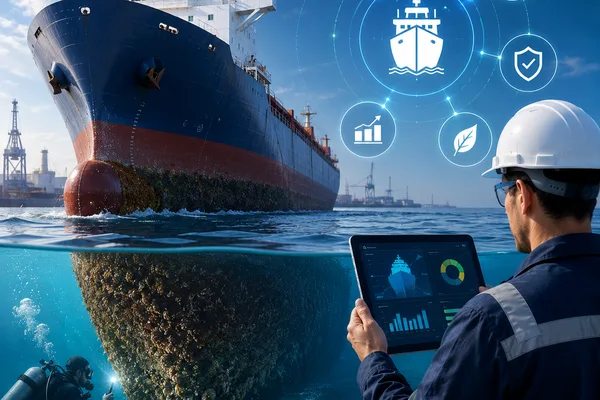
Biofouling begins when microscopic marine organisms attach themselves to the hull of a ship. Over time, they attract larger organisms like barnacles, mussels, and algae. This marine growth creates resistance or drag, which can increase a vessel's fuel consumption by up to 30%, depending on severity.
Key Impacts:
- Higher Fuel Costs due to increased engine power demand
- Increased CO₂ Emissions from inefficient voyages
- Non-Compliance with regional antifouling and biosecurity regulations
- Frequent Maintenance and dry-docking costs
- Ecological Risk from invasive species migration
The solution? A centralized system that continuously monitors hull condition, alerts you to fouling risks, and recommends the right time to act.
Features of Ecosail’s Biofouling Monitoring System
Hull Fouling Detection & Analytics
Our software processes inputs from:
- Diver inspection reports
- Underwater drones or ROV video footage
- Dry-docking visual surveys
- In-service hydrodynamic performance data (e.g., fuel consumption, shaft power)
Using this information, the platform assesses fouling severity in accordance with standardized scoring systems such as:
- IMarEST Hull Fouling Rating System
- IMO Biofouling Guidelines (MEPC.207(62))
Integrated Inspection & Maintenance Logs
Stay organized with:
- A centralized dashboard for scheduling and tracking hull inspections
- Historical cleaning records, categorized by type (e.g., water-jet, brushing, ultrasonic)
- Antifouling coating performance logs — track effectiveness over time and plan recoating windows
Biofouling Heatmaps
Our AI-powered heatmap visualization identifies biofouling hotspots across the hull:
- Waterline vs. keel
- Sea chests, propeller shaft, bilge keel areas
- Niche areas often missed in routine inspections
This helps determine where growth is most aggressive and where localized cleaning can be prioritized.
Fouling Forecasting & Alert System
Based on vessel:
- Trading routes
- Speed profile
- Seawater temperature
- Port residence time
…our system generates fouling risk scores and sends proactive alerts when conditions are ripe for growth, prompting preemptive action.
Cleaning Optimization Engine
Cleaning hulls too frequently results in unnecessary costs and potential coating damage; cleaning too late increases fuel use and emissions. Our system finds the balance using:
- Cost-benefit analysis of cleaning vs. drag
- Impact models showing post-cleaning fuel savings
- Recommendations on best port locations for in-water cleaning based on regulations and service availability
Strategic Benefits
1.Fuel Efficiency & Cost Reduction
Monitoring and maintaining a clean hull can result in fuel savings of 5% to 30% per voyage. Our platform helps you track these gains and make informed decisions that impact your bottom line.
2.Regulatory Compliance
Global and regional regulations are tightening. Our tool supports compliance with:
- IMO Biofouling Guidelines
- New Zealand Craft Risk Management Standard (CRMS)
- California Marine Invasive Species Act
- Port State antifouling rules
Our reporting system generates documentation for port authorities and audit-ready logs for charterers and regulators.
3.Environmental Stewardship
Minimize the risk of introducing invasive aquatic species and contribute to marine ecosystem protection. Align with global sustainability goals and environmental social governance (ESG) criteria.
4.Asset Longevity
Regular cleaning and coating performance tracking extend the life of your ship’s hull, reducing long-term maintenance and dry-docking frequency.
5.Operational Transparency
Give charterers and partners real-time visibility into hull condition and fuel optimization metrics, building trust and credibility.
How It Works: System Architecture
- Input Sources:
- Diver inspection reports (uploadable in PDF, video, image formats)
- ROV/Drones via API integration
- Manual surveys and cleaning logs
- Processing Layer:
- AI/ML models to assess growth trends and patterns
- Dynamic risk scoring algorithms based on vessel data and environmental parameters
- Output & Dashboard:
- Visual heatmaps, maintenance alerts, and fouling trend graphs
- Cleaning cost calculators and compliance reports
- Integrations:
- Link with Fleet Management Systems
- Export reports to ESG dashboards or compliance logs
Performance & ROI Tracking
Track how your maintenance strategy impacts:
- Fuel consumption per nautical mile
- Carbon intensity (CII rating trends)
- GHG emissions for MRV, IMO DCS, and ETS
- Hull roughness coefficients pre- and post-cleaning
Our dashboard offers before-after comparisons and ROI estimation for every cleaning cycle.
Who Should Use This Tool?
- Fleet Managers: Stay on top of inspections and schedule optimal hull cleanings
- Technical Superintendents: Monitor antifouling coating performance and dry-dock planning
- ESG/CSR Teams: Track environmental KPIs and generate sustainability reports
- Charterers: Ensure your chartered vessels maintain performance and compliance
- Port Authorities & Surveyors: Review vessel fouling condition and biosecurity risk